Wednesday, January 20, 2016

Yet more moor


From Tuchenn Gador
I've been looking back at my life to trace the history of my profound attachment to landscape. This background may or may not figure finally in the new book I'm working on, but here's an extract anyway:

There were early travels over the Brecon Beacons, as my poor exiled Welsh parents, miserable in manicured and over-managed Gloucestershire countryside, often made the return to their homelands - Swansea, Mumbles, Gower - with four children in tow. It was part of my father's sad, hopeless quest for a reassuring identity and a crucial building block in my own first passionate attachment to landscape.

The sight of those moors we passed made me happy, and when I walk now on the heaths of the Monts d’Arrée in Brittany I am connected each time with that childhood self in the rekindling of a deeply stirring feeling of boundless freedom. I know better now that the apparent simplicity of the moors is an illusion, but it seemed of high value then. Other landscapes were psychologically more complex to me even as a small child: the sea with its tides, the changing shape of a river, the uncertainties of woodland, hills lost to the unsettling exploitation of farming. But those long, high rounded slopes, empty of life and difficulty, solid and unchanging, gave me both a powerful sense of permanence and an invitation to limitless possibilities, to the open heart and mind that seemed so perplexingly elusive in the constraints and compromises of the everyday world. I came to learn that there was far less isolation and considerably more connection for me in the wilderness of moor than in family life.

Friday, January 01, 2016

Prepositions of place


I’m really looking forward to this new year. My work will concentrate on local landscape – natural and built - and how it comes to shape and absorb us, offering a relatively stable network of emotional connection in an uncertain world. This is forged by the heightened experience of being inside and within one’s environment, a participant rather an objective observer. I’m also increasingly interested in why certain places exert a hold whilst others with similar elements do not, and how somewhere with no specific historical significance or enhancement through legend can still generate a remarkable atmosphere and make its mark on all who pass by or through it.

Prepositions of place may well turn out to be the title of the book.

Wednesday, December 23, 2015

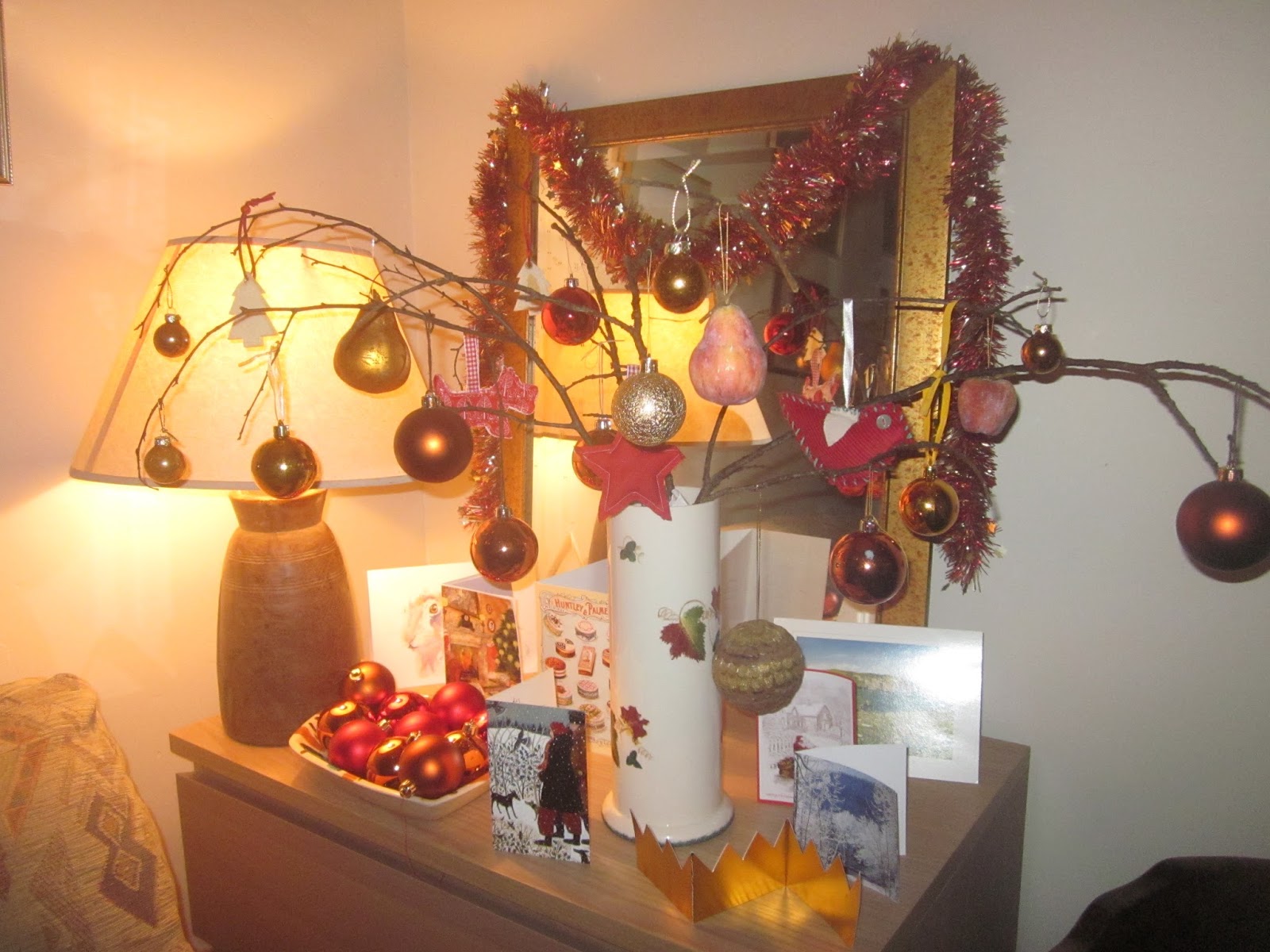
Happy Yuletide

Good wishes for the festive season to all my kind readers and followers, with thanks for all the great support and lovely messages during 2015, even though I've had no new book out in the last year. I'm still getting letters about Moon Garden (from 2004)! There will be two new books in 2016, Walks in Finistère and 'the landscape one'. Happy holidays, one and all.

Sunday, December 13, 2015

Connection

One response to stomping globalization and recent atrocities of all kinds could be a return to close acquaintance with local environment, a pulling back into the beautiful diversity of small-scale observation and appreciation. Less talking and watching, more seeing and noticing. Getting to know the world in our immediate vicinity does more than enhance real as opposed to superficial knowledge and understanding: it offers a sense of purposeful belonging. It gives a multi-layered quality to everyday life that can satisfy restless yearning for 'meaning' or the transient excitement of novelty. And it's an infinite exercise, an exploration that will occupy even a long lifetime. Connection with our own land is connection with our own lost selves.

Tuesday, December 01, 2015

End of a very long walk

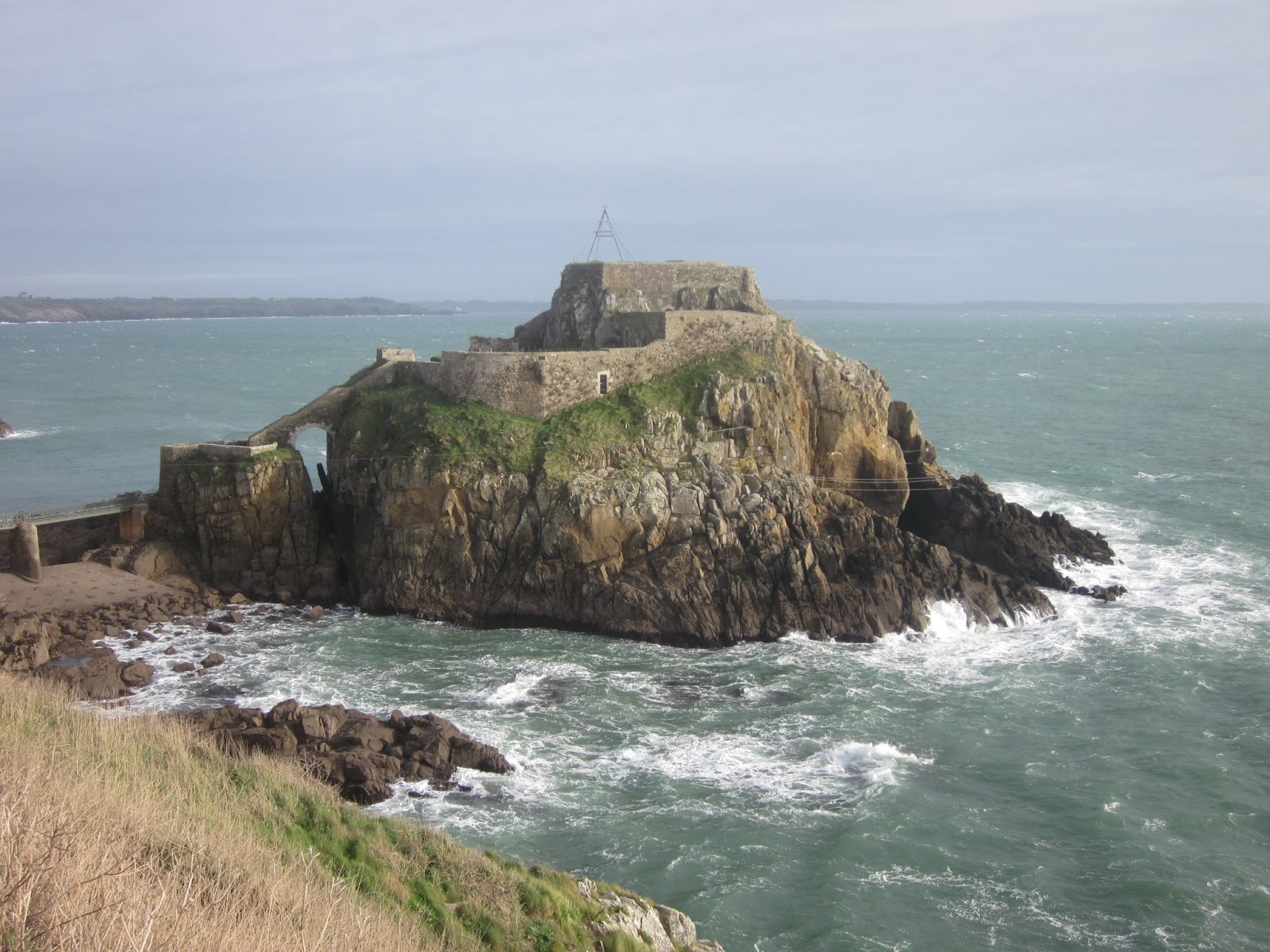
Fort de Berthaume
Finishing up the walking book routes, only just behind schedule. Now it will be a relief to sit down at my desk and finish all the texts. I ended up covering more ground than intended and more routes than will probably fit in the designated number of pages, but better too many than not enough at this stage. Very pleased to rewalk this last section, a linear route from Le Conquet to Plougonvelin. It's one of my favourites and a piece of coast I'll never tire of, even though high gusting winds on the cliffs this time made me cautious. Ended up at this magnificent fort in bright weather. Glad that my back-up was waiting with a car, but for those less fortunate and not on expenses, there's a bus back to the starting point if retracing all those kilometres is just too much to contemplate.

Tuesday, November 24, 2015

My heart lies in the forest

After recent events in Paris, one of the few memorable reactions on my Twitter feed was from a woman bewildered and feeling the cold shock of a secure hold on daily life slipping away. I cling to my land, she said. I don't know if she meant it literally or metphorically but it brings up once again the question of landscape as comfort and stability. It is the familiarity of 'one's own' physical territory that offers a sense of consistency that can be relied upon in a world that is changing alarmingly before our aging eyes. Those of us who believed our generation would at least never see another world war begin to doubt that flimsy hope, as layer upon layer of hatred, intolerance and misconception flattens and stunts the potential of  humanity.
The rate of change in landscape can be as rapid as a fallen building, or as gradual as the creeping threat of floods with climate change, but we like to feel it remote in our immediate surroundings, at the millenia speed of eroding granite.We have been startled in Brittany to discover last week that the state is to sell off some of our forests, those symbols of life before human settlement, of the longevity that spawns legends. Forests that were once noisy places of human abode and economic activity are now mostly silent and dressed in recreational attire of finger-posts and picnic tables. Is this an identity to be perpetuated for the sake of our need to believe nature is all around us and that we are still alive in some meaningful way? Do we need forests? Of course we do. I clung to my land this week with gratitude.

Tuesday, November 10, 2015

Finishing and getting started

Currently writing about this ancient bridge - Pont Krac'h
It's a strange time. My exhibition is now over, although the month flew by and I was too busy to be there often or even to think much about the outcome of all that work. Certainly my texts were well-received, and perceptively so from the messages and comments I've had from very diverse places and people. I'm grateful to everyone who bought a booklet and took the time to give me feedback.
Turning my attention (at last) to the new landscape book, I finally realised the degree of concentration it is going to need and a huge investment of time. So I made the big decision to finish with Brittany Walks, after 11 years of offering a monthly (until recently twice monthly!) programme of guided walks. I'm sure it's the right thing at the right time, but it represents a great change in my working schedule, and I'll miss the many lovely people who have supported the walks, some of them since the very beginning.
I am also coming to the end of the walking for the new Finistère walking guide which will be out next spring. Of course there remains masses of work to do on the background information, maps and page lay-out, but psychologically finishing the field work feels as if the project is almost over in terms of mental (and very physical) commitment. My mind will soon be much clearer and able to focus on the landscape essays. Whether this new book will be only in French is a big decision to be made over the winter. It will rather depend on publishers in the end and whether separate editions in the UK and France is really a viable option. I almost feel that there are two different books there. This long winter will tell.

Saturday, October 31, 2015

Best west coast walk

Chateau de Dinan
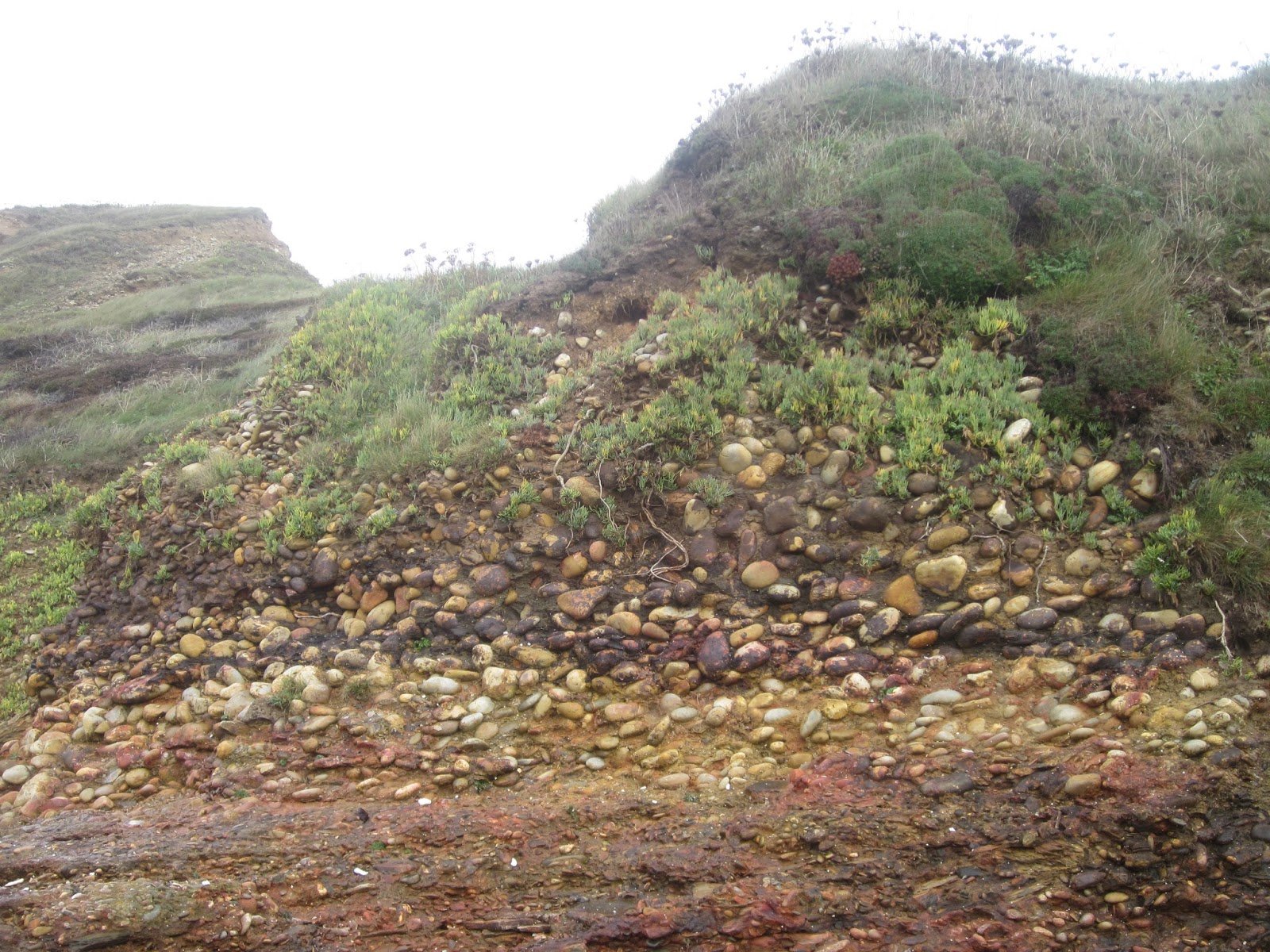
Revisited my favourite coastal route in Brittany this week. The stretch between Camaret and the Cap de la Chèvre has everything a walker could possibly want - and then some. Natural features like the so-called Chateau de Dinan, the extraordinary raised beach at Porz Koubou and other geological wonders like pillow-lavas, historical sites such as the Iron Age éperon barré at Lostmarc'h, a memorable sight below you after breasting a high ridge, looking down on the lines of defensive ditches and ramparts that once protected a small community from their enemies.
Raised beach
Other works of defence are remnants of the Mur d'Atlantique, German protection of this wild west coast, where only the most foolhardy would ever have considered any sort of landing. Surfers haunt the vast beaches here but it is too dangerous for swimming.
Lostmarc'h
The coastal path streaks through moorland - gorse, heather and low spiky thorn - down to beaches, up to yet more cliffs, the gradient sometimes decidedly steep, the proximity to the edge precarious. It's all the very best of coastal walking, seeing the paths rippling ahead across the contours, looking back on headlands conquered one by one. At the end is the reward of the Cap de la Chèvre itself, with a WII memorial to the naval air arm, granite plane-wing rising against the blue sky - for I felt not a drop of rain that day, despite black clouds menacing from time to time.

Thursday, October 22, 2015

Seeing the sea

I'm concentrating now on coastal walking for the new book. This section will include some linear suggestions for Finistère's sensational littoral, so a route of about 10km becomes a day long out and back excursion (or a lift, taxi or even bus can make it a one way walk if so desired). The point is to highlight the best bits so walkers who only have a limited time can be sure of getting a memorable journey - and best bits usually means avoiding the obvious (i.e. places easily reached by car, like the Pointe du Raz).
So today I was on Cap Sizun, revisiting some favourite sections of the coastal path and enjoying the mild sea air, softened by occasional misty rain drifting across the high cliffs, as below at Kastell Koz.
 A good day's work, even if my knees would have preferred to stay at home and watch TV.

Saturday, October 17, 2015

Village in a sacred space


I had a wonderful walk in Locronan in beautiful sunshine on Thursday. The route concentrated on the wooded countryside around this unusual village, which has a strange dual nature, the sense of artificiality spread unconvincingly over something profound. The name means the holy place of Ronan, the Breton saint of Irish origin who came to Brittany and like many others, faced opposition and antipathy. He moved around, settling finally in this sylvan paradise said to have been the location of a well-defined Celtic nemeton or ritual space, with specific points linked to movements of the heavens.
Each day he walked the boundary of this area, an action commemorated today in the annual Tromenie walk (extended to the full 12km every six years). The chapel of Penity attached to his imposing church in the village centre has the saint's tomb. Locronan sits between the Bois du Duc and the Bois du Nevet, remnants of ancient forest. Anyone following the walk (to feature in my new book) will have the sense of the numinous landscape that is the source of these legends and religious affiliations.
But the other more obvious face of the village, which has brought many film-crews (including Roman Polanski who filmed some scenes for Tess of the d'Urbervilles here) and attracts hordes of tourists throughout the year, is made up of handsome 17-18th century façades around the centre square before the church. Remarkably unspoilt, these reflect the wealth derived from sail-cloth making in the heyday of the Breton cloth trade.
Today many artists and craftsmen have their workshops here and there are plenty of bars and restaurants, making it doubly desirable for a day's outing. Not always to be relied on though: a couple of years ago I decided to come here on my birthday just before Christmas, to buy a few presents, have lunch and a walk, as the weather was unseasonably sunny and mild. Everything was closed, even the bakery, so with no possibility of food, I paid my respects to St Ronan and drove home for a cheese sandwich.

Tuesday, October 13, 2015

At the opening

Delighted to be presented by the artists (organized by my great friend Liz) with a calendar containing wonderful images from the exhibition. The opening was a very happy occasion for us all with lots of appreciation from the public (and sales).

Saturday, October 10, 2015

Today

High moor by Jill Jamieson
My exhibition on Breton landscape at L'Autre Rive in the forest of Huelgoat opens today at 16.30 (rather than 17.30 as advertised initially because of important politcal meeting in the evening at same venue). Booklets of the texts I'm displaying with some other collected pieces of my recent landscape writing are on sale. I have to say the paintings look magnificent now that the exhibition is hung and ready to go - my friend and fellow-exhibitor Liz Ridgway worked with me and Marc from L'Autre Rive all yesterday evening to get things right. I owe her many thanks for many things and also here thank the other artists who have produced such fine work. All welcome to the opening this afternoon.

Tuesday, September 22, 2015

Texthibition

Busy preparing for my exhibition on Breton landscapes at L'Autre Rive in the forest of Huelgoat. I invited four friends who are professional artists living in Brittany to work with me on this project and they've produced some fantastic work. I have six texts for display on Layers, Place-names, Moor, Forest, River and Coast, all very different in form and style. There will also be for sale a little booklet of those texts plus other landscape writing I've done this year. Hoping for a good turn-out at the opening.

Wednesday, September 02, 2015

Downhill all the way

Very frustrating day checking out a walk for the new book: a walk that turned out to be useless. It looked good on paper, starting at a ruined church on the bank of a beautiful river, then climbing to a hill-top with long views. This was all fine, but the bit of road walking which followed turned out to be past not what looked on the map like small farms but in reality were enormous intensive complexes. Then a long section through a stream valley and extensive woods began and turned into a nightmare of confusing paths, flooded stream-beds and scrappy overgrown scrubland with no mature trees and no views whatsoever.
A strange and unpleasant sense of claustrophobia set in as hours passed in attempts to reconcile the two maps I had with what was on the ground and actually to get out of this dense part of the route to breathe freely again in the outside world. In desperation I made a long, very steep scramble up a hillside and finally got a limited view to orientate myself back to the start point, abandoning any hope of creating a circuit. Even with a good map and good directions there would always be elements of uncertainty and disorientation on this cursed route and that's not what people want when they buy a book to be sure of good walks. So a day is gone for nothing and another walking day has to be scheduled at a time when I'm already overstretched with commitments. But a friend reminds me it comes with the job and that it's the whole point: I must waste my time so others don't. OK then, but I'm not going to smile about it.

Sunday, August 16, 2015

Coastal unseens

Lesconil
Texts for my exhibition in October are moving along now, with Moor, Forest and River pretty much finished, and I'm starting to concentrate on a piece to be called Coastal Scenes. Fortuitously, I had planned to take a friend to the coast this week for her birthday treat, staying in a hotel just above the beach at the Baie des Trépassées in the far west. Our first day, after a visit to the allée couverte at Lesconil, we arrived in a thick Atlantic mist, the mass of surfers suddenly bursting into view on the shore as if from nowhere. We decided to walk the 3km to the Pointe du Raz along an undulating coast path, despite the lacks of views, the fact it was already 5 o'clock and that I was limping after quite a bad fall on rocks at the Moulin de Keriolet earlier in the afternoon. We could hardly see the water at all, and arriving at the huge, hideous statue of Our Lady on the point, had no visual sense whatever of being anywhere near the sea, whilst just below us churned one of the most dramatic and malevolent straits in Europe - an unusual perspective on the nature of coast.
Hotel
Day Two began in heavy rain but we made a slow start and arrived at the Pointe du Van to clearer, drier skies and were able to have a good walk, with views towards the Iron Age éperon barré of Castelmeur. This was followed by coffee in Audierne and a (for me, yet another) visit to Menez Dregan, where the paleolithic cave was still fully uncovered and much more visible than on my last trip a couple of weeks ago. We sat for a long time on a bench further down the coast just gazing at the sea before the long drive home. Although at no point was I consciously thinking about my text, I found myself quite unable to sleep last night, despite being physically exhausted, and several times had to leap out of bed and rush to my desk to make notes, a process that felt at the time not unlike rushing to the bathroom to be sick in the night.
Coastal seen

Wednesday, August 12, 2015

Canal again

Several things have brought me back to the Nantes-Brest Canal lately, a construction I wrote two books and several articles about quite a few years ago and a territory that once so often mirrored my inner landscape. In clearing out some old CDs I found a copy of the French TV programme in which I appear tallking about the canal. French people sometimes recognise me from that production but I've never actually seen it before, so it was strange to watch my self of eight years ago, so familiar and yet so long gone.
More practically, I'm doing a feature on the canal in Finistère for the new walking book, and yesterday went out to rewalk one of my favourite circuits at Pont Coblant, which includes a 4km stretch of the beautiful Aulne river (a bit insulting to call it a canal here) in countryside far removed from roads and noise of any kind. The inland section goes over a hill to give great long views, particularly towards Karreg an Tan, the Fire Rock, which will also be in the book.
The canal does not start in Nantes, nor end in Brest, but its original military prupose was to link the two naval bases (and Lorient via the Blavet canal south from Pontivy) and provide a secure inland route at a time when Napoléon was frustrated by English naval supremacy and the resulting blockades of Breton ports. Most the 365km length is made up of beautiful rivers - the Oust, the Blavet and the Aulne being the most remarkable - with artifical sections cut and ladders of locks built to cross the hills between their valleys. It was only fully open long after Napoléon's time and became used mainly for the transport by barge of materials like stone, slate, wood and sand. The railway soon became quicker and more economical, with a better organised infrastructure of depots and loading facilities. Great leisure resource though the canal undoubtedly is these days it was always something of an economic white elephant.

Monday, July 27, 2015

A load of stones

At Menez Dregan today, doing a leisurely circular walk for the new book to take in the magnificent prehistoric site on top of the Pointe du Souc'h. I mention the point because a two-handled rounded pottery vase discovered here in the late 19th century gave the name vase du souc'h to that style of find. The various tombs discovered are the result of nine phases of development of the site during the Neolithic period. Recent reconstruction work has given an indication of the original cairn covering which enclosed the dolmens.
Just down the road is the enormous allée couverte of Pors Poulhan, a remarkable revival after the Germans blew it up in 1942 as an obstruction to their view of the coast. It was still possible to excavate in the mid 1980s and turn up weapons, tools and jewellery showing usage as a burial site from 6000BC onwards.
As if this wasn't enough, below the Pointe du Souc'h a paleolithic cave-dwelling from 465,000BC is today carefully protected by a coating of metal plates, its roof having long since collapsed. Here evidence of created hearths, the oldest in Europe, has been found. I was fortunate to be there today at the moment when a team of helmeted workers began uncovering the site, perhaps in preparation for events taking place this week as part of Rencontres Prehistoriques de Bretagne.
I first visited Menez Dregan many years ago alone, and again in 2007 with the departmental archaeologist Michel Le Goffic explaining the excavations in great detail. Since those times much has changed, from reconstruction work to a smart new visitor centre, large information panels and landscape gardening. There's not much left to the imagination these days and no room at all for any sense of awe. I certainly had that when it was just a load of stones on a headland. Maybe a question of can't see the stones for the words.

Wednesday, July 15, 2015

River


St Mawes castle
I've been in Cornwall, thinking about rivers and enjoying some trips on the Fal, downriver from Truro and up river from Falmouth, the latter thanks to Alison and John and their little yellow boat. I wanted to see some of the territory from Philip Payton's Rising Ground on the spirit of place, but the book never really came alive for me as it seems more about people than place, apart from a few memorable straight descriptions. I think there is still a significant gap between landscape history and accessing a spirit of place.

Tuesday, July 07, 2015

Nantes, the siren city

Working in Nantes at the weekend, in sweltering heat. Managed to take a look at some of the Voyage art installations that I've missed in previous visits and as ever enjoyed the sheer blooming vitality of this ever-changing city. It is a place of the present, and light in atmosphere, despite a weighty and dubious historical heritage of wealth based on the slave trade. It would be very hard to be miserable in Nantes...
Wit and ideas, an irresistible combination, which makes walking the city streets a real experience and brings the urban landscape into a sharper focus than when it stands alone. There's an infinity more to Nantes than the famous big mechanical Elephant on the Ile de Nantes, perhaps the difference between tourism and enhancement.